ServicesSiding
Anderson Creek Siding Repair and Replacement
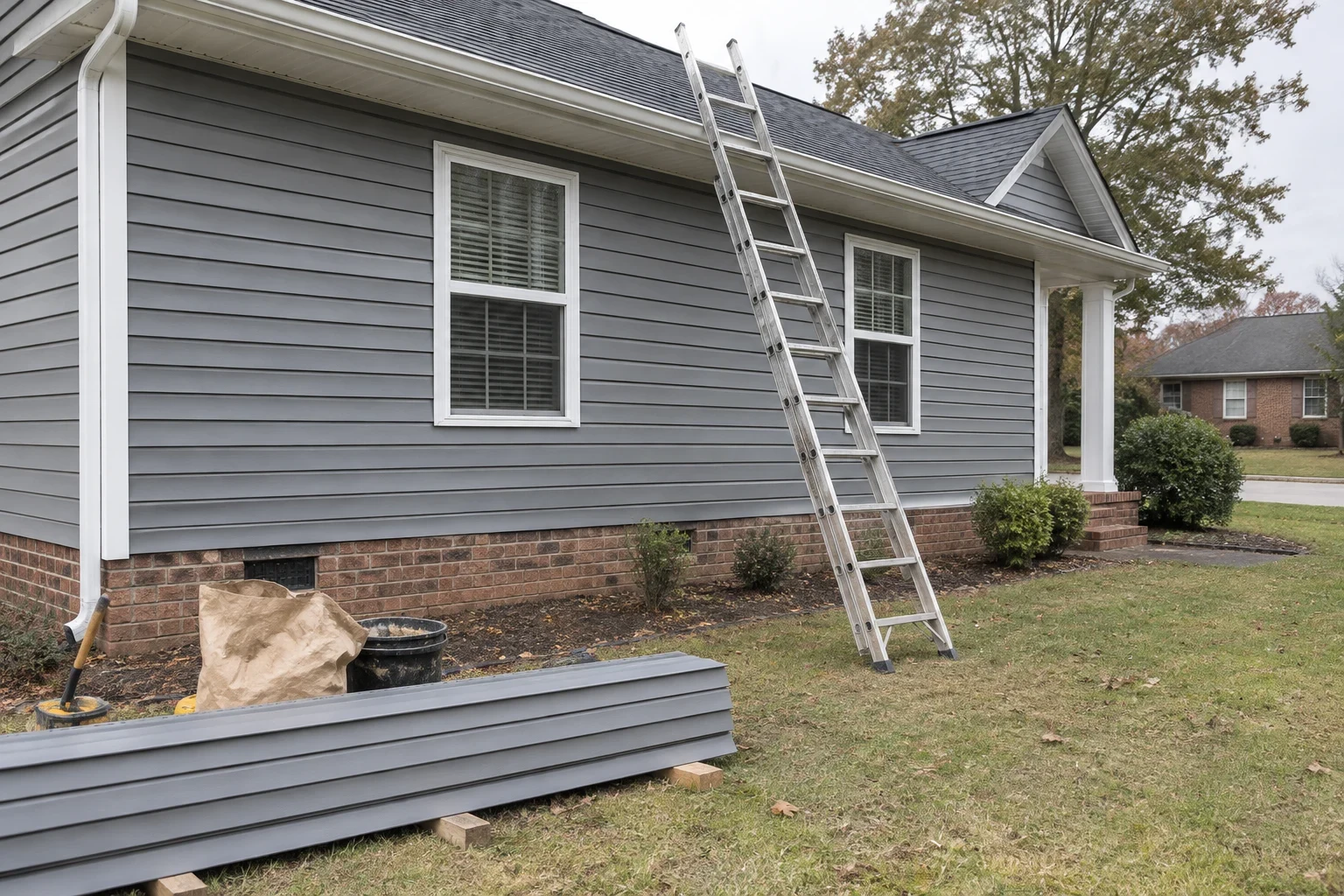
Cracked vinyl, unlocked courses and swollen fiber cement all let water reach the wall behind them. We trace each failure to its cause and photograph every damaged panel and soft patch of sheathing, so you can weigh a repair, a full replacement or an insurance claim with evidence in hand.
How Siding Protects Your Home and When to Fix It
Think of the exterior wall as layers. The siding you see sheds most of the rain. Under it, a weather-resistive barrier, usually house wrap, catches what slips past. Under that is the OSB or plywood sheathing nailed to the framing. Vinyl hangs from nails driven loosely through slotted hems, which lets each panel slide as it heats and cools, while fiber cement boards are fastened through the face or blind-nailed into studs. Once a panel splits, unlocks or works free, rain reaches the wrap, and that thin sheet becomes the last defense for the wood behind it.
Swapping out a handful of damaged panels is often enough. A full replacement makes more sense when the sheathing feels spongy, when panels have turned brittle along an entire elevation, or when the original profile and color simply cannot be matched anymore. Our company has been doing this work for 10 years under an NC and SC unlimited builder license, and we rebuild every layer of the wall that needs it rather than hiding a problem under new vinyl.
Hail and high wind cause a large share of the siding damage we find. When that is the case, we photograph the walls with the same care we give a storm-damaged roof, so your insurance company is looking at the damage as it really is.
What Our Siding Work Includes
Damage mapping with photos
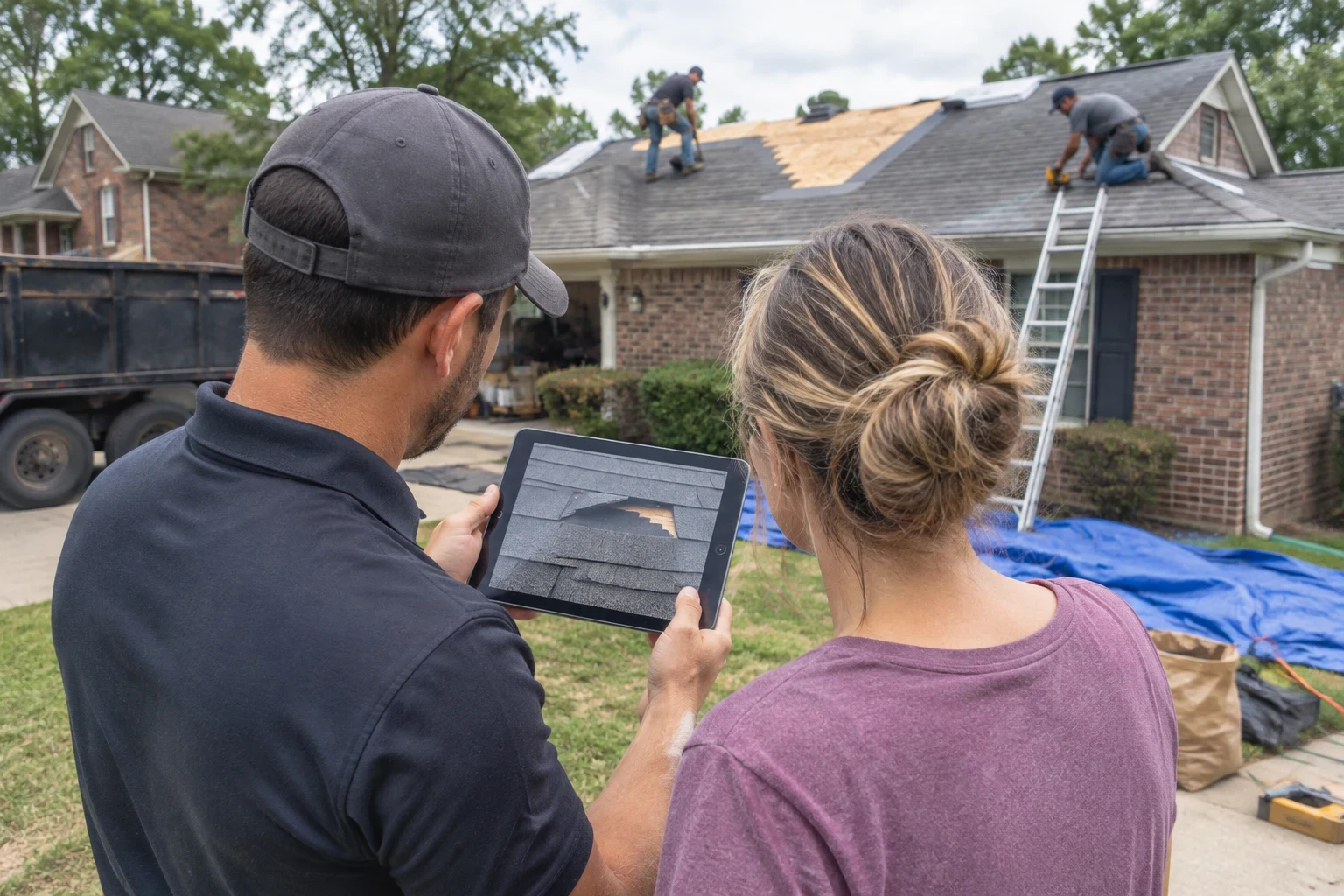
We walk every elevation and photograph cracked panels, hail spatter, unlocked courses and loose trim. Each photo is labeled by wall so you and an adjuster can find the same spot.
Panel repair and replacement
For vinyl, we unlock the course above with a zip tool, remove the damaged panel and lock in a new one without disturbing the wall. For fiber cement, we cut out the board and replace it with matching exposure and nailing.
Barrier and sheathing check
With panels off, we inspect the house wrap for tears and the sheathing for soft spots. Damaged sheathing is replaced and the wrap is patched and lapped shingle-style so water runs outward.
Trim, channel and flashing
We reset or replace J-channel, corner posts, starter strip and the kick-out flashing where a roof edge meets a wall. A missing kick-out sends roof runoff straight behind the siding, and it is one of the most common causes of hidden rot.
Full-wall or whole-house replacement
When repair no longer makes sense, we strip to the sheathing, install new house wrap and hang new siding with correct nail spacing and expansion gaps.
Signs Your Siding Needs Attention
- Cracks or holes after a hailstorm
- Vinyl gets brittle in cold weather, and hail can punch clean holes or leave star cracks. Even small breaks let wind-driven rain behind the panel.
- Panels that bow or ripple
- Waviness usually means the panels were nailed too tight to move with the heat. Over time the locks pull apart and the panels can blow off.
- Loose or missing courses
- Strong gusts can unlock vinyl from the course below. Once one panel is gone, the wind gets underneath its neighbors.
- Soft or stained walls inside
- Bubbling paint, damp drywall or a musty smell on an exterior wall points to water getting past the barrier, often from a missing kick-out flashing or a torn wrap.
- Chalky, faded or split boards
- Heavy chalking on vinyl or cracked, swollen edges on fiber cement mean the material is near the end of its life.
How a Siding Job Runs
- 1
Inspection and photo report
We inspect the walls, trim and flashing and give you a photo report of what we found. You get our honest view on repair versus replacement.
- 2
Claim support if it is storm damage
If hail or wind caused it, we explain how the claim process generally works and can meet your adjuster on site to point out each damaged area. Coverage decisions belong to your insurance company, and we will not promise an outcome.
- 3
Written scope and materials
You receive a written, line-item scope listing panels, trim, wrap and any sheathing allowance. We source a matching profile and color, or explain plainly when a match is not available.
- 4
Install day
We protect landscaping along the work area, remove damaged material, repair the barrier and sheathing and hang the new siding. Each wall is closed up before we move on.
- 5
Cleanup and walkthrough
We magnet-sweep for nails, haul away debris and walk the finished walls with you, with before-and-after photos for your records.
What Sets the Price of a Siding Job
The biggest variables are how many square feet of wall we cover and what turns up once the old panels are off. After the inspection you get a written estimate, with any sheathing allowance spelled out before work begins. If spreading out payments would help, financing is available through Acorn Finance.
- Square footage and wall height
- More wall means more panels, trim and hours on site. Upper-story elevations are slower to work because we set up staging or long ladders before a single panel comes off.
- Siding type and profile
- Standard vinyl, insulated vinyl and fiber cement each carry different material costs and install speeds. When an older profile has been discontinued, a small repair can grow into redoing one full wall so the courses line up and the color reads the same.
- What is hiding behind the panels
- Soft OSB or torn house wrap must be corrected before anything new is hung. Since that damage stays hidden until the siding is removed, we list it as a separate allowance you can see on the estimate.
- Corners, channel and flashing
- Every inside and outside corner, J-channel run and kick-out flashing takes careful cutting and fitting. Houses where several rooflines die into a wall need more of that detail work.
Siding Questions We Hear Most
- Will my homeowners insurance pay for hail-damaged siding?
- Many policies cover sudden storm damage, but wear and age usually are not covered. We document the damage with dated photos and can meet your adjuster to show it. The coverage decision is your insurer's, and we will tell you honestly if the damage looks more like age than a storm.
- Can you replace just a few panels instead of the whole wall?
- Often, yes. Vinyl panels unlock and relock course by course, so a few can be replaced cleanly. The catch is matching, since older vinyl fades and profiles get discontinued. We bring samples and tell you before work starts whether the match will look right.
- Should I choose vinyl or fiber cement?
- Vinyl is lighter, faster to install and handles humidity well, but it can crack in hail. Fiber cement is heavier and more impact resistant and does not soften in summer heat, but it costs more to install. We will lay out both for your walls rather than push one.
- How do you find water damage hidden behind the siding?
- We look for stains, soft spots and bulging, then pull suspect panels to check the house wrap and sheathing directly. Areas below roof-to-wall joints and around door openings get extra attention, because that is where water most often gets in.
- Should my roof be checked at the same time?
- If a storm damaged your siding, it very likely hit the roof and gutters too. Our roof inspections and storm damage repair work let us photograph everything in one visit, which makes a single insurance claim easier to document.
Find Out What Is Behind Your Siding
We will inspect your walls, trim and flashing and send you a photo report of what we find. If it is storm damage, we can walk your adjuster through it.