ServicesRoof Inspections
Roof Inspections in Anderson Creek, NC
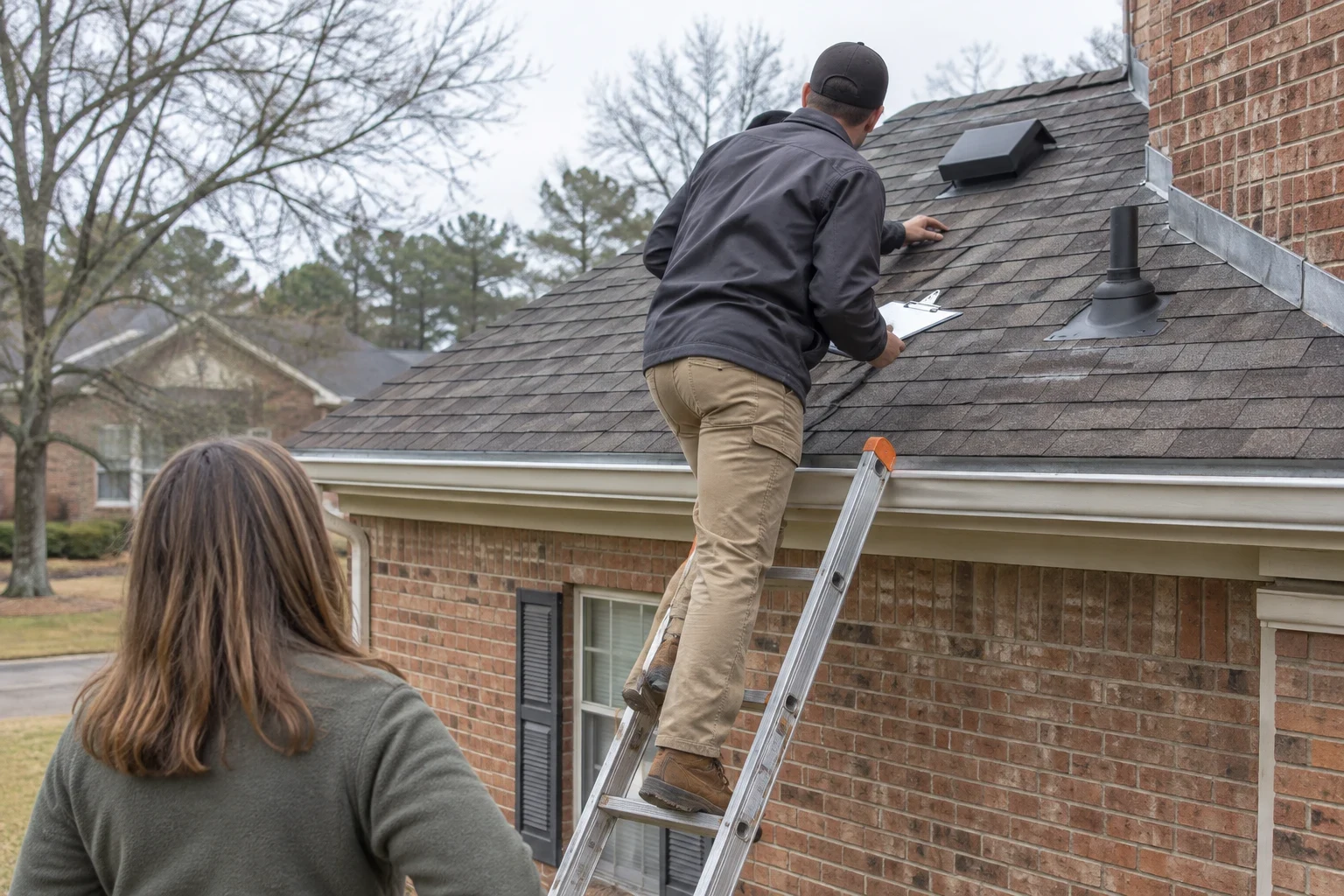
Our inspection covers the shingle surface, the flashing, the attic and the gutters, and every problem gets photographed where it sits. You receive a photo report naming each issue and its likely cause, so a repair or an insurance claim rests on evidence instead of guesswork.
Why an Inspection Comes Before Any Repair
Roofs rarely fail all at once. A shingle nail works loose through summer heat and pushes up the tab above it. The rubber collar around a plumbing vent hardens in the sun and cracks. Water then tracks along that nail shank or vent pipe into the plywood, sometimes for months, before any stain reaches your ceiling. Catching it at that stage keeps the fix small.
Our company has 10 years in business behind it and holds an NC and SC unlimited builder license. We inspect in a fixed sequence, top to attic, so no slope or penetration gets missed. Each item in your photo report comes with a short explanation of what caused it. When damage fits a hail or wind event, we point out the evidence. When it is ordinary aging, we tell you that plainly, since an insurance filing based on wear usually ends in a denial and a few lost weeks.
What We Check on Your Home
Shingles and granule loss
We look for creased, lifted or missing tabs, exposed fiberglass mat and bare spots where granules have washed off. Granules shield the asphalt from UV, so heavy loss means the shingle is aging faster.
Flashing, vents and pipe boots
Step flashing at walls, chimney counterflashing, valley metal and vent collars are where most leaks begin. We check for rust, gaps, failed sealant and cracked rubber boots.
Decking and attic
From above, we feel for soft or spongy decking. From the attic, we look for daylight, dark stains on the sheathing, wet insulation and blocked soffit vents that trap humid air and rot the plywood from below.
Gutters and drainage
We note sagging runs, loose hangers and downspouts that dump water against the foundation. Overflowing gutters can push water behind the drip edge and into the fascia.
Storm and hail documentation
After hail or high wind, we mark and photograph impact bruises, torn shingles and dented soft metals like vents and gutters. Those photos give your adjuster something specific to review.
Signs Your Roof Needs an Inspection
Hail or high wind came through
Hail bruises are crushed spots in the shingle mat that rarely show from the driveway. When roofing crews start appearing on your street after a storm, get yours looked at while your policy's reporting window is still open.
Grit at the splash blocks
Dark, coarse granules piling up below downspouts or in the gutter trough mean your shingles are losing the coating that shields the asphalt from sun.
Ceiling stains or a musty attic
A brown ring on the drywall or a stale, damp smell upstairs tells you water has had a way in for some time. The stain is only the end of that path, so we trace it back to where it starts.
Tabs lifted, curled or on the lawn
Shingles that flap, cup at the corners or end up in the yard usually have a failed seal strip or nails that never held.
An aging roof or a home sale
When a roof is past the middle of its expected life, or your home is about to change hands, a documented inspection shows how much service is left before you budget or negotiate.
How the Inspection Works
- 1
Set the visit by phone
Let us know what you have noticed and the date of any storm. We pick an appointment around your schedule.
- 2
Ground check, then the roof
From the yard we look over gutters, fascia and siding first. If the pitch and weather make it safe, we go up and photograph each issue right where we find it.
- 3
Inside the attic
If you allow it, we examine the underside of the sheathing along with the insulation and ventilation. Leaks often turn out larger here than they appear from above.
- 4
Your photo report
We go through each picture with you: what the problem is, what caused it, and whether it is urgent or can wait. For damage that looks storm-related, we explain how a claim usually proceeds and can be on the roof when your adjuster visits.
What Sets the Price of the Work That Follows
There is no charge for the inspection. What it usually settles is the price of the next step, and that depends on what we find. Your photo report lays out each of the factors below, so the numbers on any estimate make sense to you.
- Repair or replacement
- A handful of split pipe boots or a few lifted tabs add up to a small roof repair. Granule loss across whole slopes, shingles that crack when bent or soft decking in several places usually means roof replacement is the better use of your money.
- How sound the decking is
- Plywood or OSB that has rotted must be removed and new sheets fastened down before any roofing is installed over it. Nobody can measure the full amount until the old layers are torn off, so we photograph soft areas in advance to set honest expectations.
- Size, pitch and access
- More square footage, steeper slopes, extra valleys, dormers and chimneys all add labor and flashing details.
- Insurance coverage and financing
- When your insurer approves the damage, what you pay out of pocket generally follows your deductible and the scope your adjuster writes. For anything the policy does not cover, financing is available through Acorn Finance.
Questions About Our Inspections
Something not covered here? (910) 858-8300
Am I obligated to anything after the free inspection?
No. There is no charge, and you keep the photo report whether you hire us or not. Many visits end with a small repair, or just the good news that the roof is in fine shape.
Will you tell me whether to file a claim?
We can describe the damage and whether it fits a hail or wind event. The decision to file is yours, and coverage is up to your insurer, not us. If you file, we can be on site for the adjuster's inspection and show the damage we photographed.
How long does the visit take?
For a typical one- or two-story home, plan on roughly an hour. Larger homes, steep pitches or an attic hatch inside a closet add time. Roofs with lots of valleys, dormers and vents take longer since we photograph every slope and penetration on its own.
Do I need to be home for it?
Not for the roof and exterior. If you are home, we can check the attic and go over the photos with you right there. Most homeowners find reviewing the pictures together the most useful part.
What warranty applies if the inspection leads to a new roof?
Our 5-year workmanship warranty covers the installation of every architectural shingle roof we put on. It stands apart from the shingle maker's product warranty.
Know What Is on Your Roof Before You Decide
A free inspection gives you dated photos and a plain explanation of every issue we find. Use it to plan repairs, set a budget or back up a claim.