ServicesCommercial Roofing
Commercial Roofing in Anderson Creek
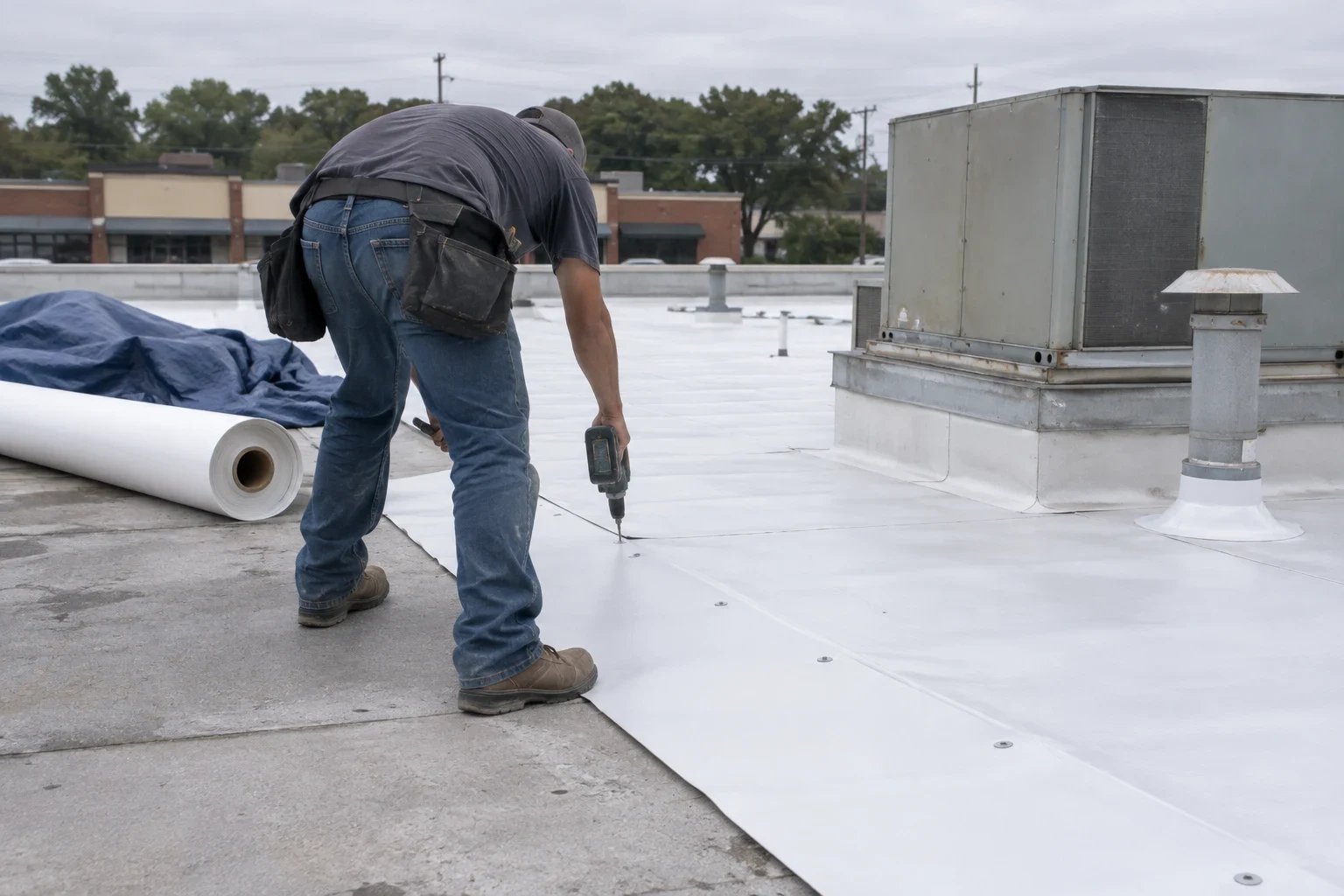
We repair, restore and replace roofs on existing commercial buildings: TPO, EPDM, modified bitumen, metal and shingle. Every job starts with a free inspection and a photo report showing what we found, where it is and what we think it needs.
Roof work for the buildings you already own
Our commercial roofing work is on existing buildings: offices, retail strips, churches, warehouses and shops. We find the leak, fix the membrane or panels, correct the drainage, and replace the roof when repair stops making sense.
Low-slope roofs fail differently than steep ones. Water sits instead of shedding, so a pinhole at a seam or a split boot at a pipe penetration can feed a slow leak that shows up as a stained ceiling tile thirty feet away. We trace water back to where it enters and explain why it got in, not just where.
We have been in business 10 years and work under an NC and SC unlimited builder license.
What our commercial roofing work covers
- Leak tracing and membrane repair
- We open the suspect area, find the entry point, and patch with materials that match the roof. A TPO seam gets heat-welded; EPDM gets primed and seamed with tape made for rubber. Mixing incompatible products is a common reason patches fail within a season.
- Flashing, curbs and penetrations
- Most low-slope leaks start at edges and openings: parapet walls, rooftop unit curbs, pipe boots, skylights and drains. We reflash these details and reset termination bars so the membrane stays sealed where the building moves most.
- Drainage corrections
- Water that stands more than 48 hours after rain ages a membrane quickly and adds weight to the deck. We clear and reset drains and scuppers, add crickets behind curbs, and use tapered insulation where the slope is wrong.
- Metal roof repair
- On metal panel roofs we replace backed-out fasteners and worn washers, reseal laps and ridge caps, and treat rust before it eats through a panel.
- Full roof replacement
- When the membrane is past repair or the insulation under it is wet, we tear off to the deck, replace damaged decking and board, and install a new system. On buildings with architectural shingle roofs, our 5-year workmanship warranty applies.
- Storm damage documentation
- After wind or hail we photograph the damage with measurements and locations, and we can meet your insurance adjuster on the roof. We explain what we see; the adjuster and your carrier decide coverage.
When a low-slope roof is telling you something
Water marks on ceiling tiles
Brown or yellow rings on a drop ceiling mean moisture has been reaching the deck for a while, not just one storm. Water travels along the deck before it drips, so the opening is rarely right above the mark.
Ponds that outlast the rain
If water is still sitting on the roof two days later, look for clogged drains, a sagging deck or insulation that has been compressed underfoot.
Bubbles, wrinkles or lifted seams
Blistered modified bitumen and TPO seams that have pulled apart give moisture a path under the membrane. Once there, it spreads across the insulation and has no way out.
Rust streaks and loose screws on metal
Metal roofs usually start leaking at panel laps where rust trails show, or where fasteners have backed out and their washers no longer seal.
Peeled edges after high wind
Leftover tropical storm systems can push rain under edge flashing and roll the membrane back at the perimeter. Get it photographed before another storm changes what the adjuster finds.
How a commercial roof job runs
- 1
Free inspection on the roof
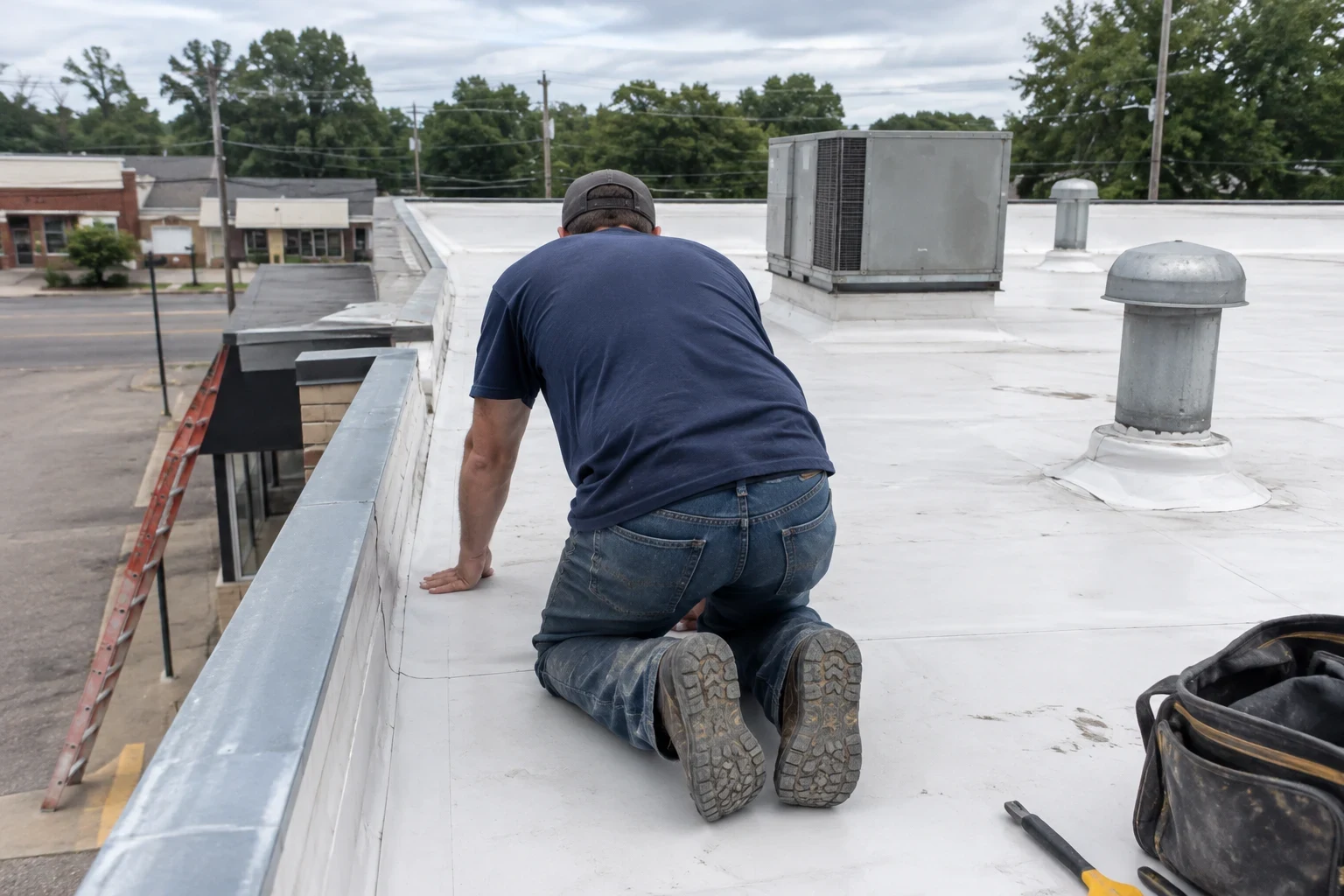
We walk the full roof surface, check drains, curbs, flashings and edge metal, and look at the underside of the deck where we can reach it. If a core cut would answer a moisture question, we ask before we cut anything.
- 2
Photo report and written scope
You get photos of each problem, marked by location, with our recommendation to repair, restore or replace. The written estimate lists materials and line items so you can compare it fairly.
- 3
Scheduling around your business
We plan work around operating hours, deliveries and parking. We dry in each tear-off section before leaving for the day so the building is not left open overnight.
- 4
Cleanup and walk-through
Crews keep debris chutes and staging away from entrances and run magnets across the lot for loose fasteners. We walk the finished roof with you and hand over closing photos for your records and your insurer.
What drives the cost of commercial roof work
Commercial roofs are measured by the square, but the square count is only the start. What is under the membrane, how hard the roof is to reach and which system you choose often move the number more. Your written estimate shows each of these as its own line.
- Roof size and layout
- Large open roofs go faster per square than smaller roofs broken up by curbs, parapets and level changes.
- Wet insulation and deck condition
- Core cuts show how much insulation is saturated. Wet board has to come out, and rusted metal deck or rotted wood deck adds material and labor.
- System choice
- TPO, EPDM, modified bitumen, metal and shingle differ in material cost, installation method and expected service life.
- Access and logistics
- Building height, lift or crane needs, and working around customers or tenants all affect crew time.
- Recover versus tear-off
- Code limits how many roof layers a building can carry. If a recover is allowed and the existing roof is dry, it can cost less than full removal.
What building owners ask us about commercial roofs
Something not covered here? (910) 858-8300
Is my flat roof fixable, or is it time for a new one?
Frequently it is fixable. When the membrane still flexes, most seams are holding and the insulation underneath is dry, targeted patches and fresh flashing can buy several more years. When water has already saturated the insulation, a surface patch will not keep the deck below from breaking down. The photo report tells you which case applies to your building.
Do you deal with the insurance company after storm damage?
We do. Every damaged spot gets photographed with measurements and its location marked, and we can stand on the roof with the adjuster so nothing is overlooked. Coverage is your carrier's decision, so we never guess at a payout or how the claim will turn out. We explain each stage and the documents insurers typically want.
Can my business stay open during the work?
Usually, yes. Equipment and materials stay away from your entrances, walkways remain clear, and the loudest tear-off is planned around your busiest hours. If an area of the building has to be cleared, you hear about it in advance.
How do I pick the right roof system for my building?
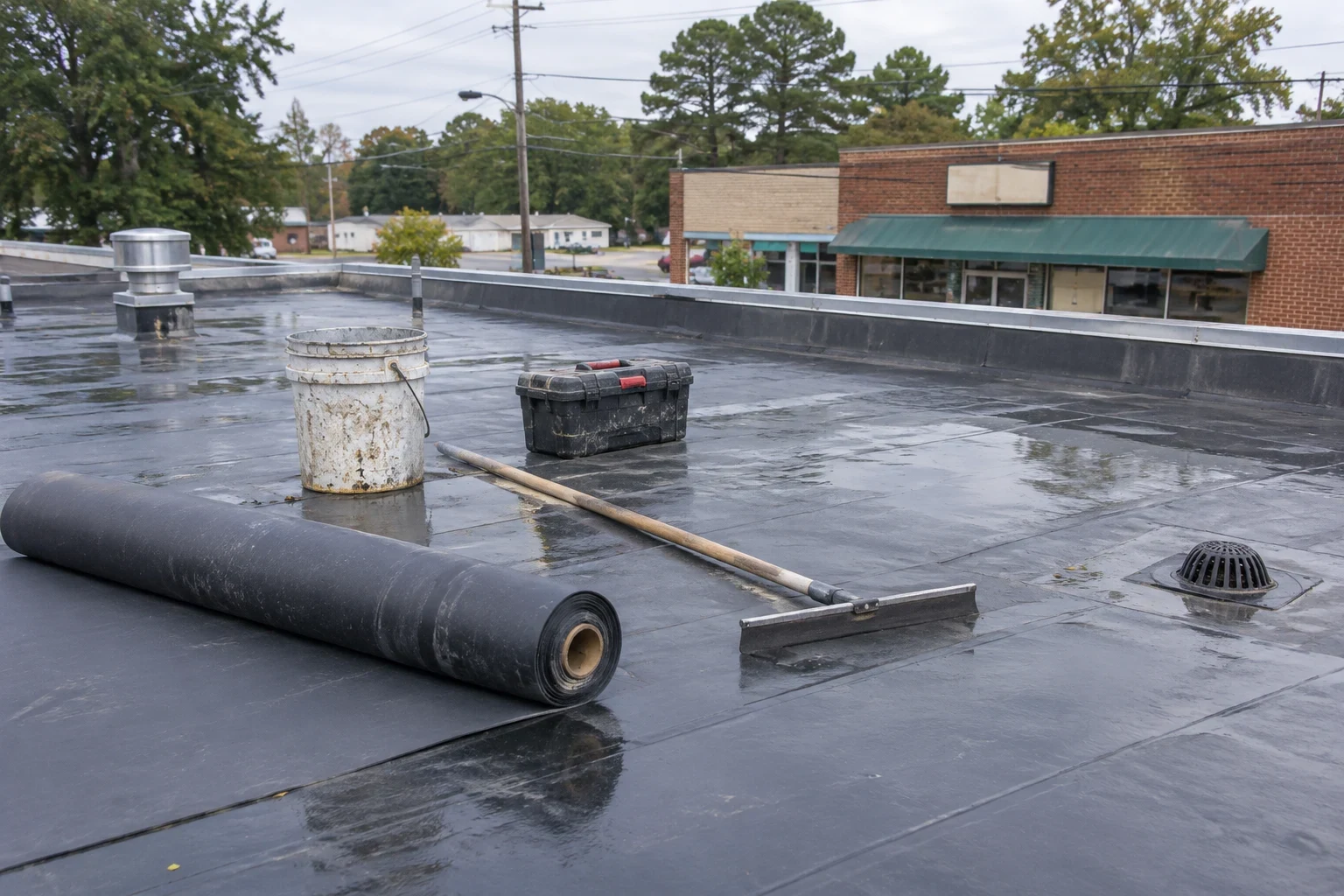
The answer depends on roof slope, how you use the building and your budget. TPO is a single-ply membrane with heat-welded seams and a white surface that bounces back summer heat. EPDM is a tough rubber membrane that copes well with temperature swings, and modified bitumen stands up to steady foot traffic. Metal suits pitched roofs. We go over the trade-offs for your building at the inspection.
Will you work on buildings beyond Anderson Creek?
Yes. Our crews handle commercial roofs in Spout Springs, Spring Lake, Lillington, Erwin, Buies Creek, Fayetteville and the communities around them. Wherever the building sits, the inspection and photo report cost nothing.
Learn what your roof needs before you pay for anything
Our inspection is free, and afterward you get a photo report of the findings along with a plain-language recommendation. What happens next is up to you.